How much carbon a reservoir retains is only part of the story of its carbon cycle. Another key question is what kinds of organic matter reservoirs deliver downstream, and what ultimately happens to that material. The molecular composition and reactivity of organic matter determine whether it continues to be transported or is broken down by microorganisms and converted into greenhouse gases.
Sibo Kang, a master’s student who joined our school in 2025, has recently made new advances in understanding organic matter transport and transformation along the reservoir–river continuum. The findings were published in *Water Research*, a journal included in the Nature Index, with Kang as first author and Associate Professor Kai Wang as corresponding author. Collaborators include researchers from the Hong Kong University of Science and Technology, Tsinghua University, the Institute of Hydrobiology of the Chinese Academy of Sciences, and China University of Petroleum (Beijing). The research was supported by the Ministry of Education’s initiative for breakthroughs in basic and interdisciplinary research, among other funding programs.
The study traced sedimentary organic matter along the Three Gorges Reservoir–middle Yangtze River continuum. By combining Fourier transform ion cyclotron resonance mass spectrometry with explainable machine learning, the researchers characterized changes in organic matter molecular composition and its spatial variation under reservoir regulation (Fig. 1). Their findings suggest that the reservoir acts not only as a “particle trap” but also as a “molecular filter.” Some organic matter originating from the upper Yangtze River, the reservoir’s water-level fluctuation zone, and in situ production settles rapidly within the reservoir. In contrast, organic matter that has undergone more extensive microbial processing and exhibits relatively low reactivity is more likely to be transported downstream. By integrating greenhouse gas emission data along the continuum, the researchers further found that organic matter dynamics under reservoir regulation were closely associated with declining CO₂ and CH₄ emissions in the middle and lower Yangtze River. These findings indicate that reservoirs can have important implications for greenhouse gas emissions from downstream river systems.
At the molecular level, this study reveals a potential mechanism through which reservoirs regulate riverine organic matter via settling, processing, and selective export. The findings suggest that the carbon-cycle effects of reservoirs should be assessed by considering not only carbon retention and greenhouse gas emissions within the reservoir, but also changes in the composition and reactivity of the organic matter exported downstream. This research provides new molecular-scale evidence for understanding carbon transport and transformation along reservoir–river continua and their potential climate implications.
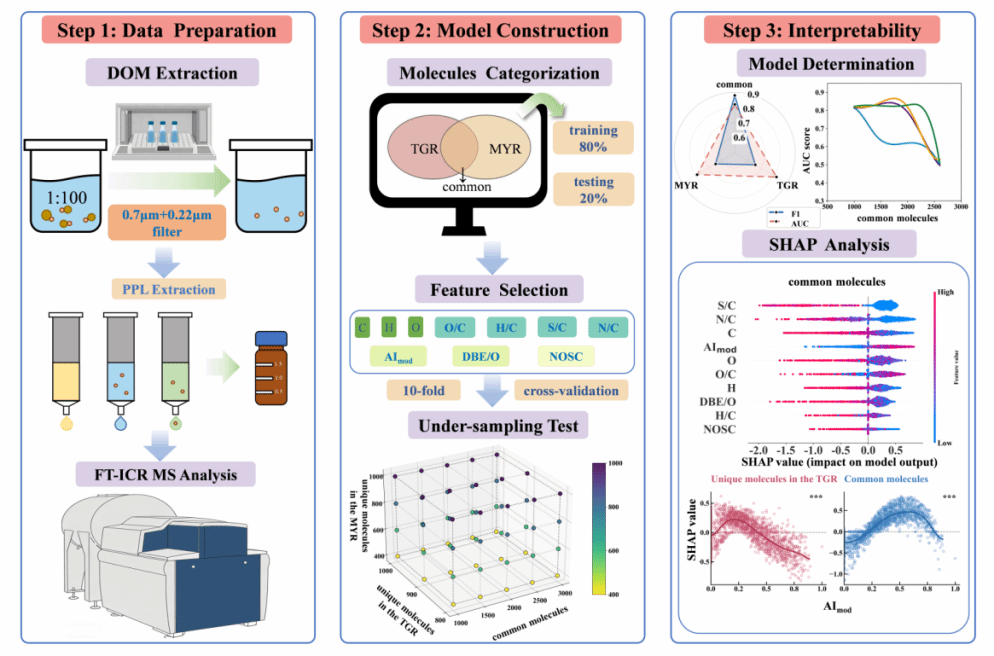
Fig. 1. Framework integrating Fourier transform ion cyclotron resonance mass spectrometry with machine learning.
Published article:Kang, S., Huang, L., Wang, H., Cui, Y., Gao, W., He, C., Shi, Q., Zhao, C., He, D., Wang, K.* (2026). Machine learning reveals reservoir regulation of riverine sedimentary organic matter and its climatic implications. Water Research, 308, 126806.