Certain lakes across the Qinghai–Tibetan Plateau exhibit naturally elevated arsenic concentrations. The partitioning of arsenic among aqueous phases, suspended particulate matter and sediments, alongside its chemical speciation, exerts a direct control on arsenic mobility and associated ecological risks. Nevertheless, the mechanisms underlying divergent arsenic behavior between freshwater and saline lakes, as well as microbial contributions to arsenic transformation within stratified lakes, remain poorly constrained.
To tackle these knowledge gaps, the research group led by Prof. Xiaodong Li from the School of Earth System Science, Tianjin University, collaborated with researchers from the Institute of Geochemistry, Chinese Academy of Sciences and other partner institutions. Focusing on the Bayin River–Lake Hurleg–Lake Tosen catchment on the Qinghai–Tibetan Plateau, the team integrated geochemical characterization of water, suspended particulate matter and sediments with arsenic speciation analysis and metagenomic sequencing to decipher how hydrochemistry and microbial processes jointly regulate arsenic cycling in lacustrine systems. Freshwater Lake Hurleg featured lower dissolved arsenic but higher particulate arsenic loads, whereas saline Lake Tosen displayed the opposite pattern. Stable water isotope and hydrogeochemical evidence demonstrates that evaporative concentration, bicarbonate‑driven competitive adsorption, and elevated pH collectively drive arsenic enrichment in the aqueous phase and facilitate arsenic desorption from particle surfaces.
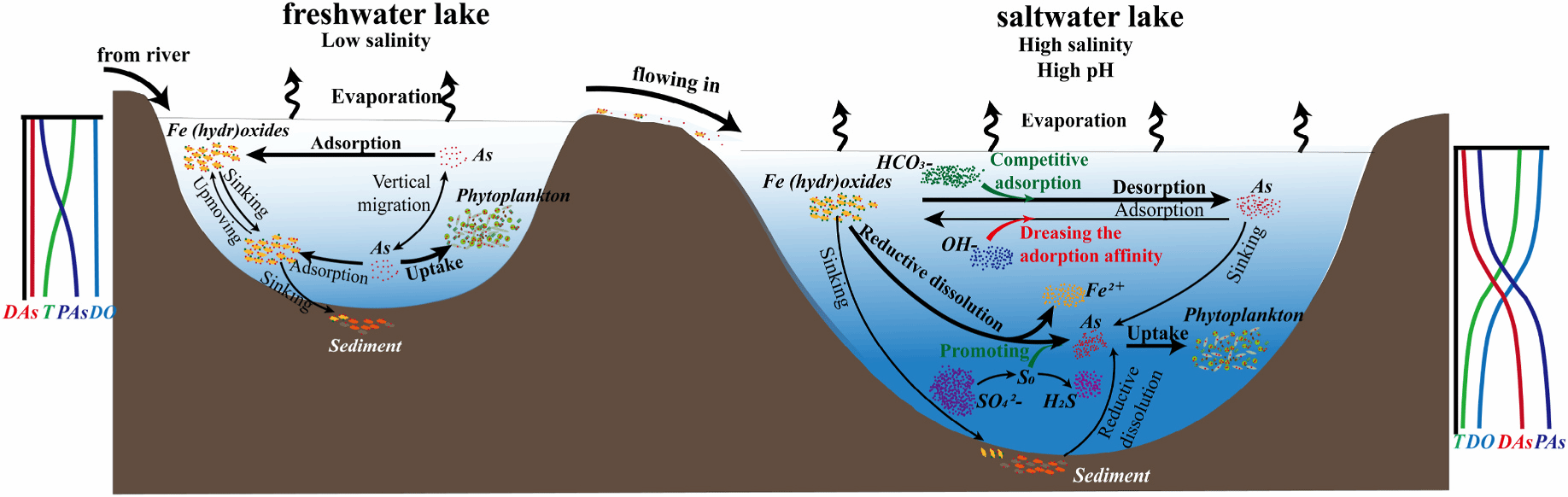
Figure 1. Conceptual model of arsenic transport and partitioning in freshwater and saline lakes.
Vertical arsenic profiles also show pronounced depth‑dependent variation in Lake Tosen. Dissolved arsenic accumulates in anoxic bottom waters, while pentavalent arsenic (As(V)) remains the dominant species in several low‑oxygen water layers. Synthesizing evidence from microbial functional genes, community composition and bulk geochemistry, the researchers identified three depth‑stratified pathways governing arsenic transformation. In well‑oxygenated surface waters, microbial arsenic detoxification is coupled with As(III) oxidation, sustaining the predominance of As(V). Within suboxic intermediate waters, nitrate‑dependent processes fuel the re‑oxidation of trivalent arsenic (As(III)). In anoxic bottom waters, sulfate‑reduction‑linked reactions further modulate arsenic speciation and mobility. Under the persistent stratification observed in Lake Tosen, the coupling of nitrogen and sulfur cycles to arsenic transformations was more prominent than signals from canonical microbial iron reduction.
Collectively, these findings link inter‑lake differences in arsenic partitioning to in‑lake microbially mediated arsenic transformations. This work advances the mechanistic understanding of arsenic biogeochemical cycling in plateau lakes and establishes a scientific foundation for evaluating risks arising from arsenic mobilization and transformation under shifting hydrological regimes, variable salinity and evolving lake stratification.
The results have been published in Environmental Research and Environmental Science & Technology—both Nature Index journals. The Environmental Science & Technology paper was selected as a supplementary cover article of its issue. Dongli Li, who enrolled in the doctoral program at Tianjin University in 2020 and currently works as a postdoctoral researcher at the Institute of Geochemistry, Chinese Academy of Sciences, serves as the first author for both publications. This research was funded by the National Natural Science Foundation of China, the National Key R&D Program of China, and the Key R&D Program of the Xizang Autonomous Region, among other grants.
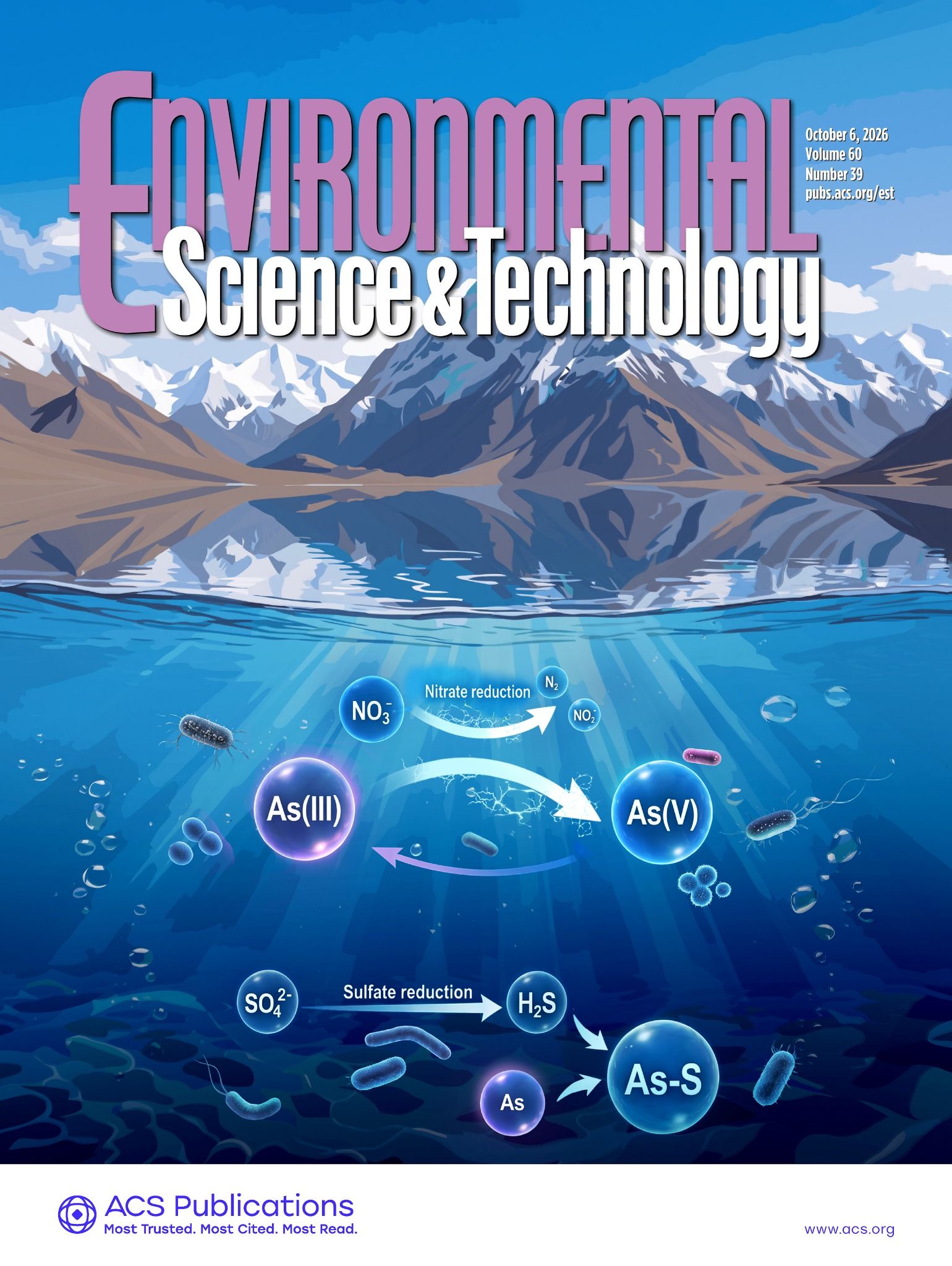
Figure 2. ES&T Supplementary Cover featuring the study.
Publications
Dongli Li, Haibo He, Mengdi Yang, Xuecheng Zhang, Tianhao Guan, Wenjing Dai, Yan Li, Hang Shao, Shiyuan Ding*, Xiaodong Li*. 2024. Arsenic distribution and partitioning in multiple media in a typical catchment in the Qinghai-Tibetan plateau: A comparison between freshwater and saltwater lakes. Environmental Research, 246, 118132.
DOI: https://doi.org/10.1016/j.envres.2024.118132
Dongli Li, Shiyuan Ding*, Mengdi Yang, Xuecheng Zhang, Tianhao Guan, Wenjing Dai, Yan Li, Hang Shao, Haibo He*, Xiaodong Li. 2026. Depth-Resolved Metagenomics Reveals Nitrate- and Sulfate-Mediated Arsenic Transformation in Lake Tosen, a Stratified Saline Lake on the Tibetan Plateau. Environmental Science & Technology, 60(39): 28001–28012.
DOI: https://doi.org/10.1021/acs.est.5c14935