Proteins are pivotal nitrogen (N) species and constitute the most abundant component of terrestrial N reservoir, especially within the organic N pool. The contents and chemical properties of protein N directly affect the conversion of organic N to small molecule reactive N species, playing an important role in ecosystem N cycling and functions. Contents and natural 15N abundance (δ15N) of extractable proteins (EPN) are critical to understanding EPN sources, transformations, and fates, yet standardized protocols for measuring these parameters are still lacking, constraining the development of process-based terrestrial N isotope models for the organic–inorganic N cycle.
Recently, Prof. Liu Xueyan’s group from Tianjin University established a pretreatment protocol for EPN contents and δ15N analyses in plants and soils through a systematic optimization of extractants and precipitants, and investigated these parameters in leaves and rhizosphere soils of Pinus tabulaeformis from North China. This study found:
(1) Spiking experiments showed that alkali dissolution at pH 14 and acid precipitation at pH 2–5 represented the optimal pretreatment regimes for preserving in-situ EPN characteristics in plants and soils, with averaged recovery rates of 97 ± 7% and 57 ± 2%, respectively.
(2) Leaf EPN accounted for 56 ± 2% of bulk N and δ15N of EPN in leaves was 1.5‰ higher than that of bulk N. The significant 15N enrichment of leaf EPN relative to bulk N evidenced the transamination reactions of amino acids as a key fractionation process during protein synthesis.
(3) Soil EPN accounted for 8 ± 0.2% of bulk N and its δ15N in soil was comparable to that of bulk N. The minimal δ15N difference reflected a plant residue-derived EPN pool or a lack of substantial isotopic fractionation during the depolymerization of soil organic N.
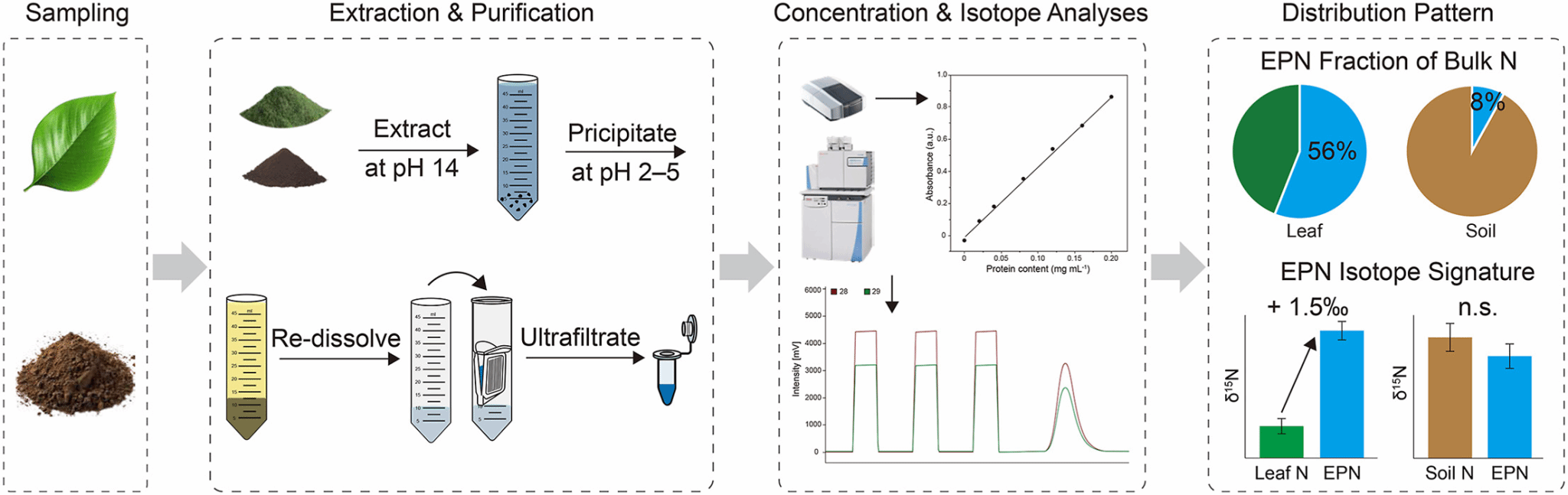
Figure 1. Protein N content and δ15N analysis of plant and soil samples
This study provides a foundation for further exploration of organic N dynamics in terrestrial ecosystems and advances the application of isotope geochemistry to N-cycle studies. The article was published in Applied Geochemistry in May 2026, with Li Songhua (a Ph.D. student at the School of Earth System Science in Tianjin University) as the first author and Prof. Liu Xueyan as the corresponding author. The research was supported by the National Natural Science Foundation of China (42330505 and 42125301).
Article information: Song-Hua Li, Xue-Yan Liu*. (2026) Nitrogen contents and natural 15N abundance of proteins in plants and soils: Analytical methods and biogeochemical implications. Applied Geochemistry, 205, 106884. https://doi.org/10.1016/j.apgeochem.2026.106884.