Groundwater numerical models are important tools for simulating groundwater recharge, runoff, discharge, solute transport processes, and managing groundwater resources. However, in practical applications, multi-layered, highly heterogeneous aquifers often lead to issues such as high parameter dimensionality, high computational costs for inversion, and the accumulation of simulation errors, which constrain the applicability and reliability of the models. To address this, Professor Xi CHEN's team from the School of Earth System Science at Tianjin University has proposed an innovative approach integrating physical mechanisms with data intelligence, starting from two pathways: "surrogate model construction" and "real-time data calibration." This approach effectively enhances the modeling efficiency and prediction accuracy of groundwater models in high-dimensional heterogeneous aquifers. The related findings have been published in two papers in the internationally renowned journal in the field of hydrology and water resources, Water Resources Research. The specific research results are as follows:
(1) To address the issue that traditional deep learning surrogate models are often "black box" models, making it difficult to maintain effectiveness in "out-of-distribution" scenarios such as fluctuations in boundary conditions or source terms, a physical mechanism surrogate modeling framework based on Operator Inference (OpInf) was proposed. This framework extracts simplified physical operators that retain the mathematical structure of the original equations from simulation data using least squares regression, significantly improving the model's physical consistency and generalization capability.
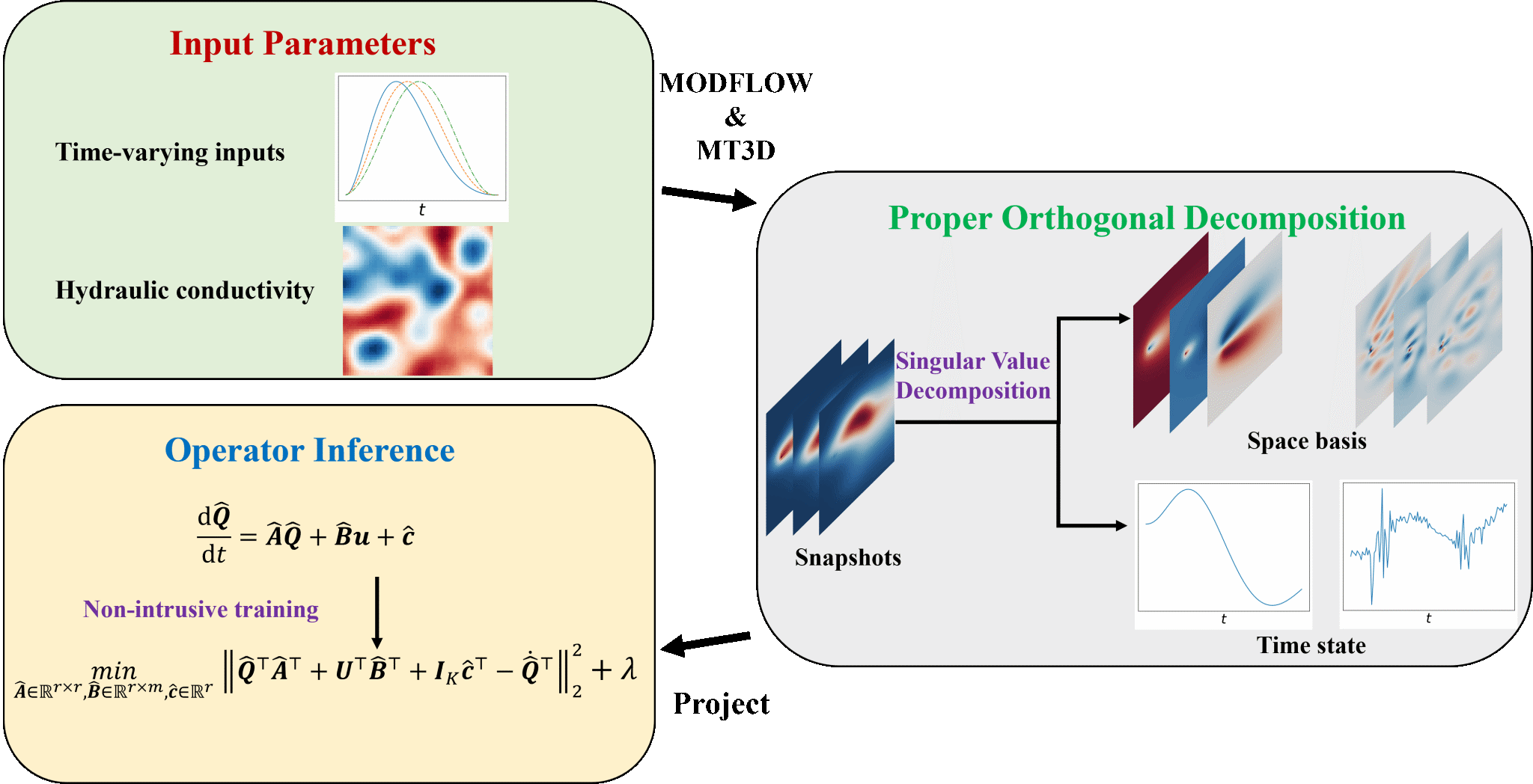
Figure 1 Flowchart of the Operator Inference structure
(2) To address the issue that prediction accuracy in groundwater models is often affected by parameter heterogeneity and initial condition uncertainties, leading to error accumulation over time, a new framework coupling a deep learning surrogate model with Latent Data Assimilation (LDA) was proposed. This framework implements assimilation algorithms within a reduced-dimensional latent space, effectively circumventing the "curse of dimensionality" associated with assimilation in high-dimensional systems.
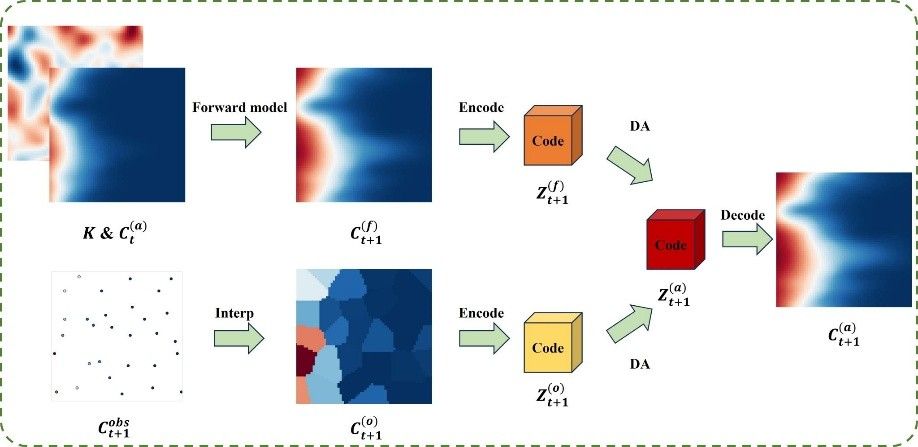
Figure 2 Flowchart of the Latent Data Assimilation structure
This research provides new insights for groundwater modeling in high-dimensional heterogeneous aquifers and promotes the application of integrating physical drivers with data intelligence in groundwater hydrology. The first author of the papers is Yongda LIU, a Ph.D. candidate at the School of Earth System Science, Tianjin University, and the corresponding author is Professor Xi CHEN. The research was supported by the National Natural Science Foundation of China (Projects U21A2004, 42450248).
Detailed Paper Information:
(1) Yongda Liu, Xi Chen*, Zitao Wang, Jianzhi Dong. 2026. Operator inference for physical and generalized surrogate groundwater modeling. Water Resources Research. 62, e2025WR039961. https://doi.org/10.1029/2025WR039961
(2) Yongda Liu, Xi Chen*, Zitao Wang, Jianzhi Dong. 2026. Latent data assimilation for efficient and accurate groundwater modeling. Water Resources Research. 62, e2025WR042424. https://doi.org/10.1029/2025WR042424https://doi.org/10.1029/2025WR042424